Meme coin trading, how a single trade can turn $1,000 into $22,000
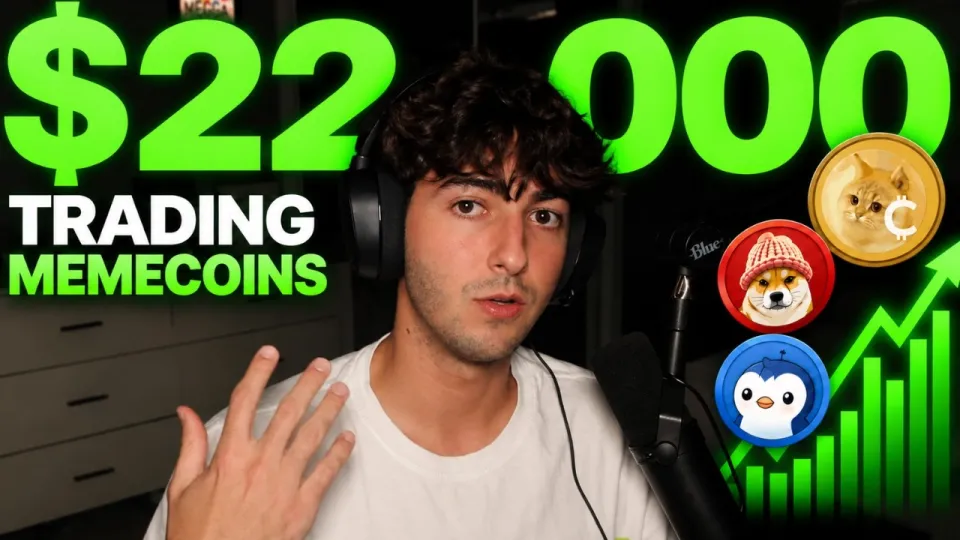
Video: How I Made $22,000 in a SINGLE Memecoin Trade (FULL GUIDE)
Want articles like this for your own video to promote it on YouTube and Google? Order them through the Telegram bot @sat_sit_bot. Articles with your video embedded are written and posted by the bot itself — on popular topical sites (no ads). Free trial — 50 articles.
· based on the channel Megga
Key takeaways
- Megga reportedly turned a single meme coin trade into $22,000 profit.
- Successful meme coin trades rely on early entry, narrative, and liquidity analysis.
- Tools like Padre and Whop's Wiredd guide help traders find and execute setups.
- Risk management is critical: most meme coins fail and can go to zero.
- Community skepticism highlights the role of insider groups and KOL networks.
Meme coin trading can produce outsized returns when a trader enters early and exits into liquidity. In a recent video, Megga shows how a single meme coin trade generated $22,000, and the method hinges on timing, on-chain research, and strict risk control rather than luck. The full breakdown is available through the free beginners guide on Whop, which covers the basics of finding and trading meme coins.
What is a meme coin and why do they move so fast?
A meme coin is a cryptocurrency with no intrinsic utility, driven entirely by community sentiment, viral narratives, and speculation. Unlike Bitcoin or Ethereum, meme coins often launch with tiny liquidity pools, meaning small buys can cause massive price spikes. This creates opportunities for early traders but also extreme volatility. Most meme coins lose 90% or more of their value within days, so the window to profit is narrow. The key is to identify coins with growing social traction before the crowd arrives, then sell into the buying pressure.
The anatomy of a $22,000 meme coin trade
According to the video, Megga's trade involved three core steps: finding the coin early, sizing the position correctly, and exiting in stages. He likely used tools like Padre (linked in the description) to track new pairs, monitor holder distribution, and execute trades quickly. The $22,000 figure probably came from a relatively small initial investment—often a few hundred to a few thousand dollars—that multiplied as the coin's market cap expanded. The exact token and entry price are not disclosed, but the structure is typical of high-risk meme coin plays: buy before the herd, sell into the first major spike.
Step-by-step: how to approach a meme coin trade
- Find early candidates: Use on-chain tools like Padre or DEX screeners to spot new liquidity pairs with rising volume and unique holders.
- Check the narrative: Look for coins with a clear meme, active Telegram or X community, and organic social growth. Avoid coins with only paid promotions.
- Analyze liquidity and holders: Ensure the liquidity pool is locked or burned, and that top holders don't control more than 20-30% of supply.
- Size your position: Only risk what you can afford to lose. A common approach is to allocate 1-5% of your trading capital per trade.
- Set exit targets: Plan to sell portions at 2x, 5x, and 10x. Take initial capital out early to secure a risk-free ride.
- Use stop losses: If the coin drops 30-50% from your entry, consider cutting losses rather than hoping for a bounce.
Common doubts and criticisms from the community
Many viewers question whether such trades are replicable without insider connections. One commenter challenged Megga to trade without his KOL network for a month, implying that success may depend on private groups or early access. Another viewer asked for a video on trading tweet coins and community coins, highlighting confusion around different meme coin categories. These concerns are valid: meme coin trading is highly competitive, and having a network can provide an edge. However, the core skills—on-chain analysis, risk management, and emotional discipline—can be learned by anyone willing to put in the screen time. The free beginners guide on Whop is a starting point for building those skills.
Risk management: the difference between a win and a wipeout
A $22,000 profit is impressive, but it's essential to remember that most meme coin trades fail. The volatility that creates upside also creates downside. Successful traders use position sizing, diversification across multiple plays, and strict exit rules. They also avoid chasing pumps and never invest more than they can afford to lose. Megga's result likely came after many smaller losses; the video focuses on the winning trade, but the underlying strategy includes cutting losers quickly. Always do your own research and consider paper trading before risking real capital.
Tools and links from the video
- Free beginners guide on Whop – a structured course covering meme coin trading basics.
- Padre trading platform – an on-chain tool for tracking and executing meme coin trades.
- Megga on Twitch – live trading streams.
- Megga on TikTok – short-form trading content.
- Megga on Twitter – market commentary and updates.
Conclusion
Megga's $22,000 meme coin trade demonstrates the potential of early entry and disciplined exits in a highly speculative market. While the exact trade details are not fully disclosed, the principles—research, position sizing, and risk control—are transferable. For those looking to learn the ropes, the free beginners guide on Whop offers a structured starting point. Remember that meme coin trading carries significant risk, and past performance does not guarantee future results. This breakdown was provided by Megga, whose channel covers trading strategies and market insights.
Source: How I Made $22,000 in a SINGLE Memecoin Trade (FULL GUIDE) · Markdown version
Questions & answers
Can I replicate a $22,000 meme coin trade with a small budget?
Yes, but it requires finding coins very early and managing risk carefully. Many traders start with a few hundred dollars and aim for multiples, but most attempts fail. Focus on learning the process rather than chasing a specific dollar figure.
Do I need insider connections or a KOL network to profit from meme coins?
Not necessarily, but having a network can provide early information and better entries. However, on-chain analysis and disciplined trading can compensate for a lack of connections. Many successful traders operate independently by monitoring new pairs and social trends.
What is the difference between a tweet coin, a profile coin, and a community coin?
Tweet coins are tied to a specific Twitter account or influencer, profile coins are associated with a persona or brand, and community coins are driven by grassroots groups. Each has different risk profiles and trading dynamics, but all rely on social momentum.
How do I avoid rug pulls when trading meme coins?
Check if liquidity is locked or burned, review holder distribution to ensure no single wallet holds a large percentage, and avoid coins with anonymous teams or unrealistic promises. Use tools like Padre to verify contract details before buying.